
Franklin County Probate Records
Franklin County Probate Court is the local court for wills, estate administration, guardianships for minors and adults, and involuntary hospitalization matters. The court also has duties that reach beyond classic estate work. Franklin County identifies the Probate Judge as the official who administers oaths of office, issues marriage licenses, issues firearms licenses, and serves as the county vital-records custodian for birth and death certificates. The Probate Judge may also hold habeas corpus hearings or criminal preliminary hearings and may handle certain misdemeanors, traffic cases, and state game and fish violations when a jury trial is not requested.
The most useful local fact is record depth. Franklin County states that Probate Court records date back to the late 1800s and are retained in the court vault. That matters for families, heirs, title researchers, and genealogy users because many estate, will, marriage, guardianship, and related probate records may never appear in a modern web search. A probate record request should identify the person, estate, marriage, or case type as clearly as possible and should be routed to the Probate Court rather than the generic county open-records process.
The Franklin County Probate Court page is the official county source for the court's mission, jurisdiction, and vault-record statement.
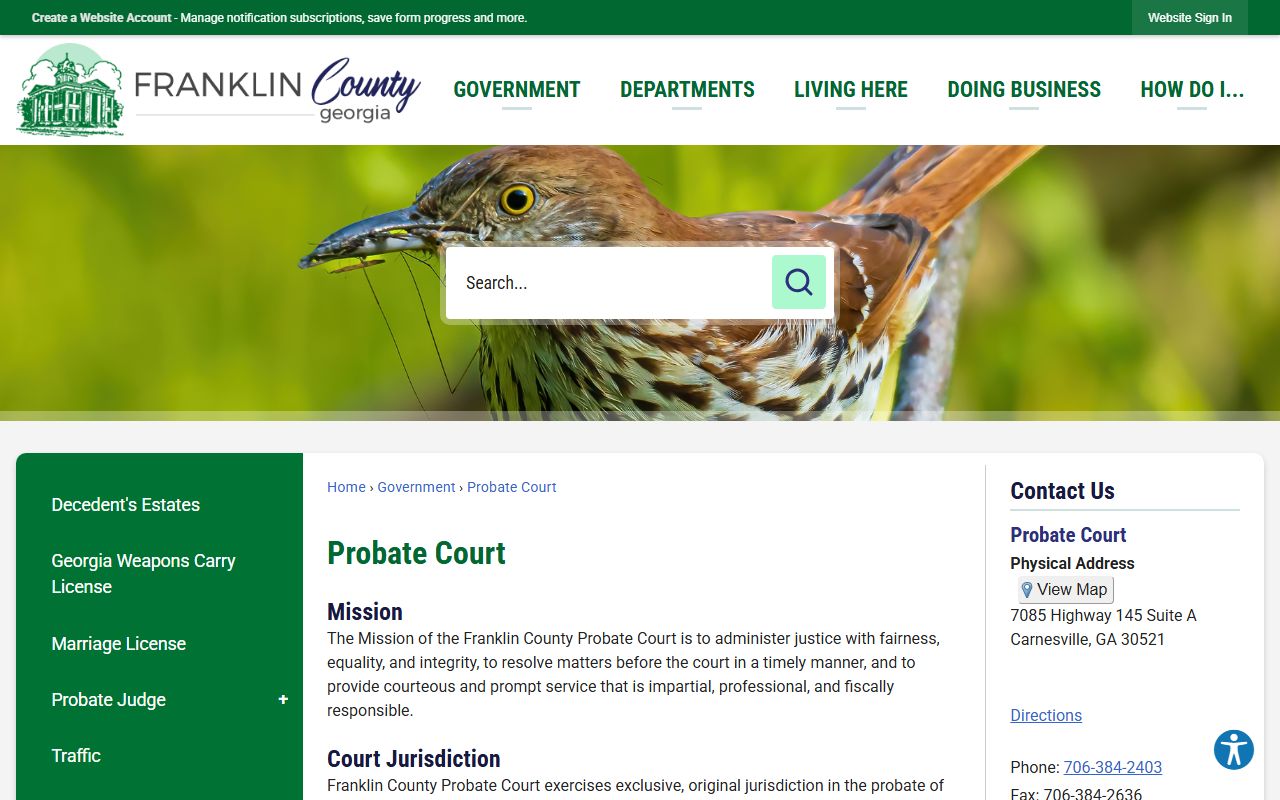
This source confirms that probate access in Franklin County is court-centered, with older records held locally rather than through a countywide online probate database.
Franklin County Probate Terms
Probate files use short legal terms that can affect what to ask for at the counter. A person searching Franklin County Probate Court records may be looking for a will, a petition, letters, an order, a bond, or a guardianship file. These terms help separate estate records from marriage, vital-record, traffic, and restricted health matters that also pass through the Probate Court.
- Testator
- The person who made a will.
- Executor
- The person named to carry out a will after appointment by the court.
- Intestate
- A death without a valid will, which can require estate administration.
- Guardianship
- A court appointment for care or decision-making for a minor or adult.
- Certified copy
- A copy authenticated by the court for official use.
Georgia probate terminology can vary by file type. For example, a will search may lead to letters testamentary, while an estate without a will may involve administration papers. Guardianship and involuntary hospitalization records can involve private health, minor, or incapacity facts, so public access is not always the same as it is for a routine estate file.
Search Franklin County Probate Records
Official research did not locate a Franklin County online probate case-search portal. The access path is direct court contact. Start with the Probate Court when the record concerns an estate, will, guardianship, marriage license, birth or death vital-record duty, weapons-carry license administration, Probate Court traffic matter, or Probate Court misdemeanor matter. The county open-records routing page says Probate Court records should be handled through the court with proper documentation and payment for statutory costs, not through a generic county request.
- Identify the record type first. Estate, will, guardianship, marriage, vital-record, traffic, and involuntary hospitalization requests do not all have the same access limits.
- Call Franklin County Probate Court to confirm whether the file is public, restricted, in the vault, or tied to a pending court matter.
- Provide the name, approximate year, case or license number if known, and the document type wanted, such as will, petition, letters, order, marriage certificate, or certified copy.
- Ask for copy, certification, retrieval, and mailing costs before sending payment because local fee amounts were not located in the captured official probate sources.
- For older estate or marriage records, tell the court the request may involve the late-1800s-forward vault and ask about retrieval timing.
- For sensitive guardianship, incapacity, hospitalization, or minor-related records, expect proof of authority or a court order before access is allowed.
Probate traffic matters have a separate online payment path in some cases through EZCourtPay, but that citation channel is not a general probate estate search. Marriage records also have a historical route through Georgia Archives guidance, while certified current county copies still route to the Probate Judge's office.
Note: Do not use the Sheriff's Office open-records form for Probate Court estate, will, guardianship, or marriage-copy requests.
Franklin County Probate Court Contact
Franklin County has a separate Probate Court counter from the Superior Court clerk and the Magistrate Court. Probate Court and Magistrate Court share the Highway 145 court-office address, but they are different suites. Probate requests should go to Suite A. Magistrate requests, such as warrants, small claims, dispossessories, garnishments, and bad-check matters, go to Suite B. Superior Court divorces and felony case files go to the Clerk of Superior and Juvenile Courts at a different address.
Franklin County Probate Court
7085 Highway 145, Suite A
Carnesville, GA 30521
706-384-2403
Traffic payment counter: Monday-Friday, 8:00 a.m. to 4:30 p.m.
The Franklin County Probate Judge page lists duties that explain why a Probate Court search can involve more than estates.
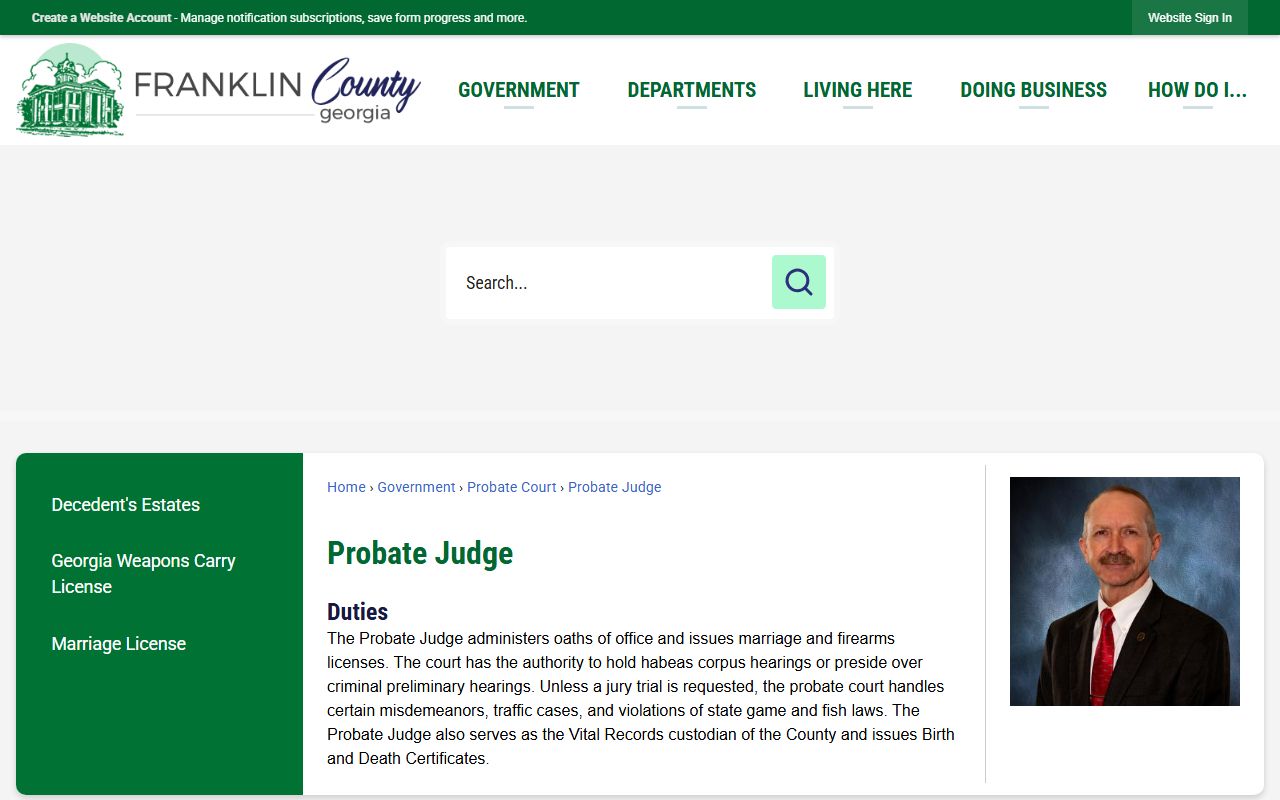
The Probate Judge source supports routing marriage license, firearms license, vital-record, preliminary-hearing, and certain misdemeanor or traffic questions to Probate Court when those matters were handled there.
Franklin County Probate Fees
Franklin County research located the rule that Probate Court requests may require proper documentation and payment for statutory cost, but it did not locate a county probate fee schedule with current estate filing, certified-copy, or marriage-license amounts. The safest request method is to confirm the current charge with the Probate Court before mailing payment or appearing for a copy. Traffic costs depend on the citation and may be checked through the traffic process, not through a probate estate fee table.
| Item | Amount |
|---|---|
| Estate filing | Fee not located in official Franklin County source |
| Certified probate copy | Fee not located in official Franklin County source |
| Marriage license | Fee not located in captured official source |
| Traffic payment | Amount depends on citation; use EZCourtPay or Probate Court |
| Statutory record cost | Required when applicable, amount not listed on routing page |
For certified copies, ask whether the court needs a case number, estate name, decedent name, file year, requester ID, or proof of relationship. A certified copy is often needed for banks, title work, estate administration, benefits, or official agency use, while a plain copy may be enough for personal research.
What Franklin County Probate Files Show
Franklin County probate files can show the name of an estate, decedent, petitioner, heirs, proposed executor or administrator, guardian, filing date, orders, notices, letters, inventories, and final case actions. Will files may include the will, witness information, petitions, orders admitting the will, and letters testamentary. Estate administration files may include appointment papers, notices, inventories, returns, bonds, accountings, and orders closing or resolving the estate. Guardianship records can include petitions, appointment orders, and later filings about the person's care or status.
Marriage records are different from estate files but still route through Probate Court. Franklin County Probate Court issues marriage licenses, and Georgia Archives guidance states that post-1900 marriage records generally are available from the Probate Judge in the county where the marriage was recorded. For marriage and divorce record routing beyond probate matters, the dedicated Franklin County marriage and divorce records page separates Probate Court marriage files from Superior Court divorce decrees.
The Georgia Archives vital-records guidance explains the county Probate Judge route for marriage records and historical vital-record research.
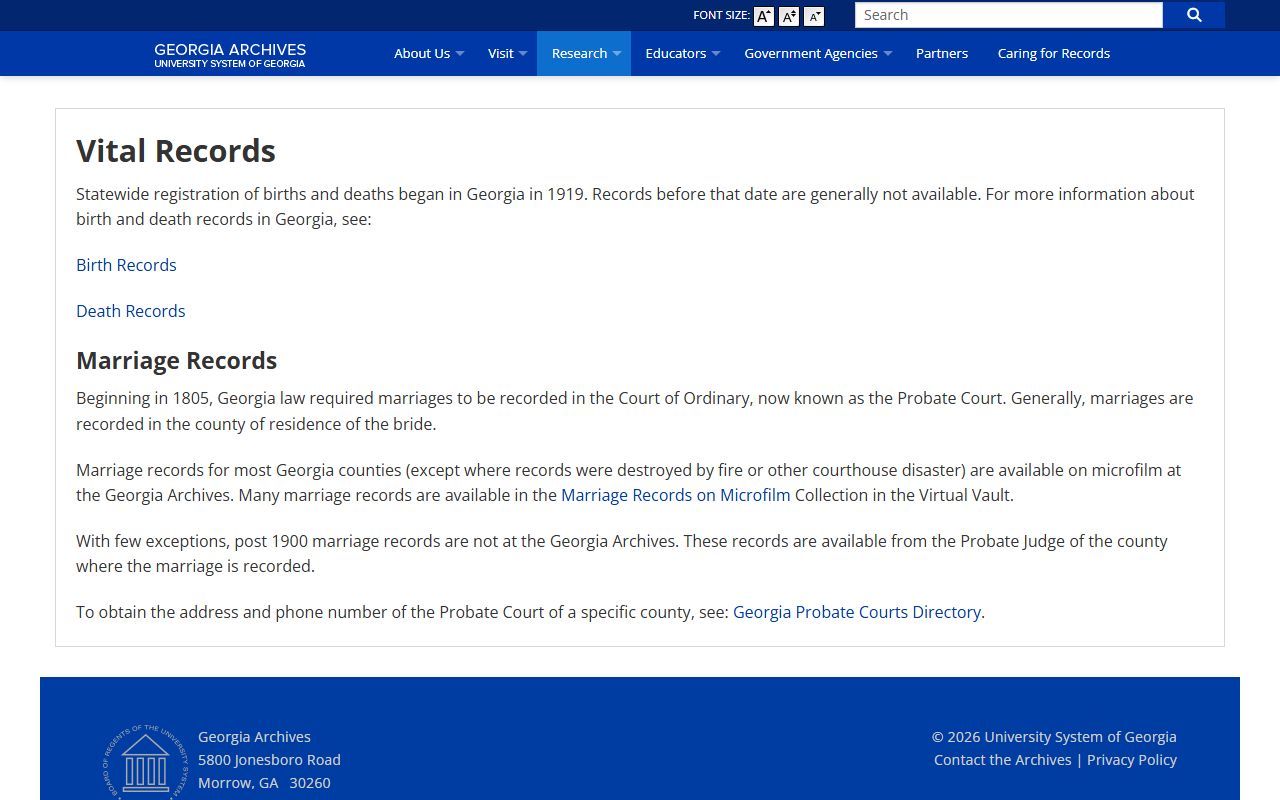
This state-level source is most useful for older marriage research, while Franklin County Probate Court remains the local custodian for county probate and marriage records.
Restricted Franklin County Probate Records
Not every Franklin County Probate Court file is open in the same way. Routine estate and will materials are often easier to request than files involving minors, incapacitated adults, medical facts, mental-health or involuntary hospitalization proceedings, sealed court orders, financial-account details, or protected personal identifiers. The Probate Court's jurisdiction over involuntary hospitalization makes this distinction important. A record may exist in the court vault but still require proof of authority before inspection or copying.
Georgia public-records law favors access unless a law or order restricts the record, but Franklin County's own routing page makes a practical distinction between executive-branch open-records requests and judicial records. Probate Court records should be requested from the Probate Court. If a probate matter led to a jury trial request or was transferred, the related Superior Court file may be with the Clerk of Superior and Juvenile Courts instead.
Note: For sensitive probate matters, ask the court what proof or order is needed before sending payment or personal documents.