
Franklin County Arrest Records and Charges
Franklin County arrest records are records of the law-enforcement event. They may involve the arresting agency, booking process, jail custody, incident or report material, and releasable sheriff records. Those records are not the same as the court charge record. After an arrest, the prosecutor decides whether and how formal charges move into court. The court charge record then appears in the docket or case file as an accusation, indictment, complaint, or related filing.
The Sheriff's Office is the local law-enforcement agency for arrest and jail records. Sheriff Scott Andrews took office in January 2025, and the office provides patrol, criminal investigations, narcotics investigations, jail operations, courthouse security, and civil process across Franklin County. For booking and custody details, the jail and sheriff route is the correct side of the system. For filed charges, pleas, disposition, and sentencing, use the court case file.
The Franklin County Sheriff's Office open-records source is the local channel for releasable sheriff records tied to arrests and booking materials.
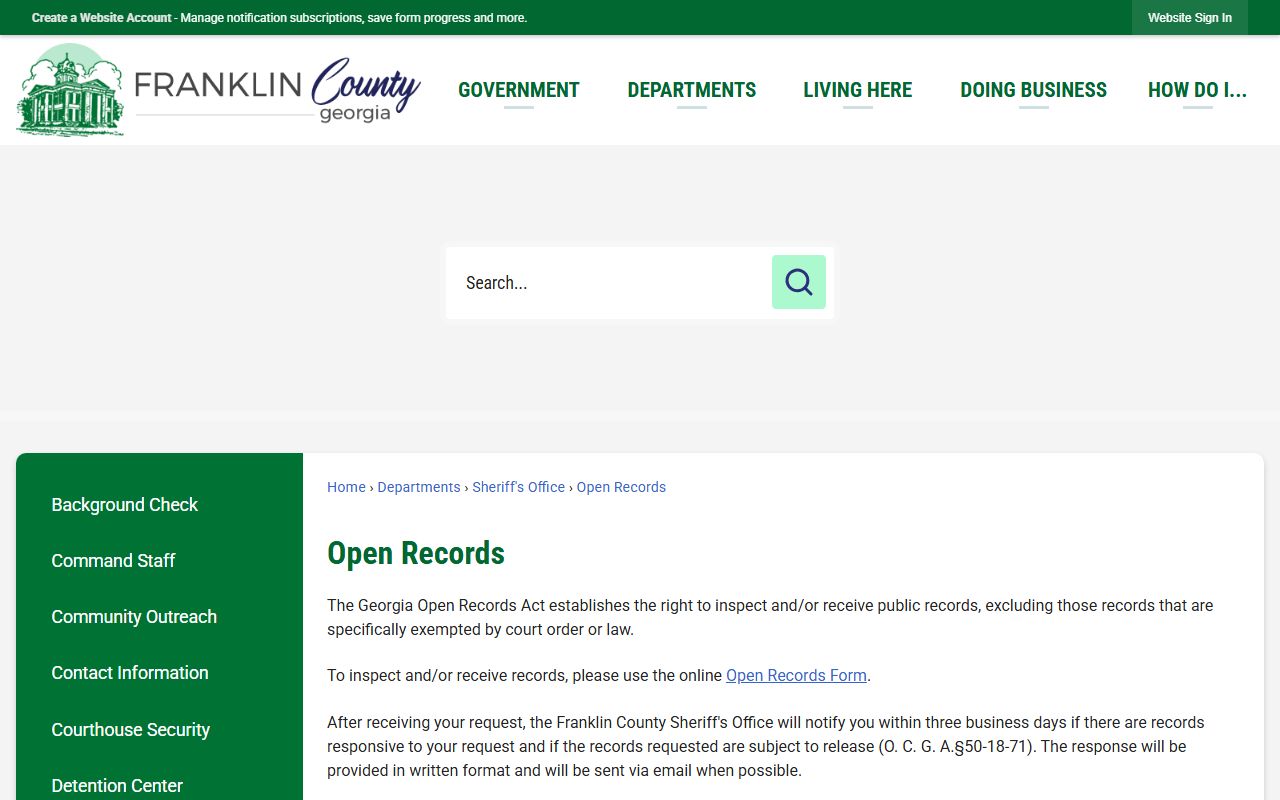
Use that sheriff channel for law-enforcement records, then use the clerk or court docket to confirm what charges were filed in court.
Find Franklin County Arrest Records
Franklin County did not publish a captured online jail roster field list in the official sources reviewed. The local fallback for arrest and booking information is the Sheriff's Office at 1 James Little Street or P.O. Box 310, Carnesville, phone 706-384-2525, or an open-records request for releasable sheriff records. The sheriff open-records page says the office will notify requesters within three business days if responsive records exist and whether they are subject to release.
- Start with the arrest side if the question is custody, booking, incident report, or jail status.
- Contact the Franklin County Sheriff's Office or use its open-records request process for releasable law-enforcement records.
- Move to the court side when the question is which charges were filed, amended, reduced, dismissed, or sentenced.
- Use the county Court Dockets page and clerk portal for Superior Court charge and case entries.
- Contact Probate Court, Magistrate Court, or a city court when the charge belongs to that court level.
A sheriff arrest record can exist even if the prosecutor later declines, changes, or dismisses charges. A court charge can also differ from the first arrest wording. That is why the arrest-to-charge pathway should be checked in sequence.
The sequence also helps avoid overreading a search result. A booking entry may show an arrest reason, but the court record may later show a different formal count, a reduced offense, a dismissal, or no filed Superior Court case. Franklin County charge research may require the Sheriff's Office for the arrest side, Magistrate Court for warrant-related entries, the District Attorney's Office for prosecution context, and the Clerk of Superior and Juvenile Courts for the filed case.
Charges After Arrest Documents
After a Franklin County arrest, the formal charge record begins when the case moves into court. The charging document tells the court what offense is being pursued. Georgia criminal cases may involve an accusation, indictment, complaint, or related charging entry depending on the court and offense. Serious felony prosecution is handled through Superior Court. Probate and Magistrate courts can handle limited criminal, traffic, warrant, or ordinance-related matters as allowed by their jurisdiction.
| Document | Filed or Initiated By | Common Use | What It Starts |
|---|---|---|---|
| Complaint | Officer, court, or prosecutor depending on case type | Initial criminal, warrant, ordinance, or lower-court matter | The first court record or preliminary charge path |
| Accusation or information | Prosecutor | Formal prosecution without grand-jury indictment where allowed | The filed charge record in court |
| Indictment | Grand jury | Felony prosecution and serious criminal matters | The Superior Court criminal case charge framework |
Charge Status in Franklin County
Charges after arrest can change. A charge may be pending at the start, amended to a different offense, reduced to a lesser charge, added through a new filing, dismissed by the court, or nolle prossed by the prosecutor. Nolle prosequi means the prosecutor has dismissed a charge. A record can show more than one charge from one arrest, and each charge may have its own status.
| Status | What It Means |
|---|---|
| Pending | The charge is filed or active and has not reached a final disposition. |
| Amended | The charge wording, count, or offense may have been changed by later filing or court action. |
| Reduced | The prosecutor or court record shows a lesser offense or lower charge path than the original allegation. |
| Dismissed | The charge was ended by court action and did not result in conviction on that count. |
| Nolle prosequi | The prosecutor dismissed the charge, often shown as nolle pros or nolle prosequi. |
| Convicted | The charge ended in a guilty plea, verdict, or other conviction entry. |
Charge vs Conviction Records
Being charged after arrest is not the same as being convicted. A charge records what the State alleges or files. A conviction records the final result after a guilty plea, verdict, or court finding. A person may have a court record with charges that were dismissed, reduced, or nolle prossed, so the disposition must be read before any conclusion is drawn.
| Charge | Conviction | |
|---|---|---|
| Timing | Appears after arrest or formal filing | Appears at final plea, verdict, or finding |
| Meaning | An allegation or filed count | A proven or admitted outcome |
| Can change | May be amended, reduced, dropped, or dismissed | May later be modified only through court processes |
| Where to confirm | Charging document, prosecutor, and docket | Disposition and sentencing records from the court |
Charge Codes and Severity
Franklin County charge records may describe offenses as felonies, misdemeanors, traffic offenses, ordinance matters, or warrant-related proceedings depending on court level. Superior Court handles felony criminal cases. Probate Court may handle certain misdemeanors, traffic, and game or fish violations unless a jury trial is requested. Magistrate Court handles warrants, limited misdemeanors, bad checks, county ordinance matters, and other matters listed in its jurisdiction.
One arrest can produce several charges. The first booking description may be broad, while the court record may break the event into counts. Each count can have its own status, plea, disposition, and sentence. For the complete case outcome, use the Franklin County criminal court record rather than relying only on the arrest record.
Traffic and ordinance charges can follow a different path from felony charges. Probate Court handles many Franklin County traffic matters, and Magistrate Court handles certain limited misdemeanors, bad checks, ordinance matters, and warrants. A charge that starts in a lower court may never become a Superior Court felony file, while a jury-trial request or felony prosecution may move the record into the Superior Court channel.
Statewide Criminal History Lookups
Statewide systems can supplement a Franklin County arrest or charge search, but they do not replace the local court file. The Georgia Department of Corrections offender query is for sentenced state offenders, not county jail detainees. The GBI sex offender registry is for sex-offender registration status. Franklin County Sheriff's Office background-check procedures are separate from the court case docket.
The Federal Bureau of Prisons source applies to federal inmates, not Franklin County jail custody or county court charges.
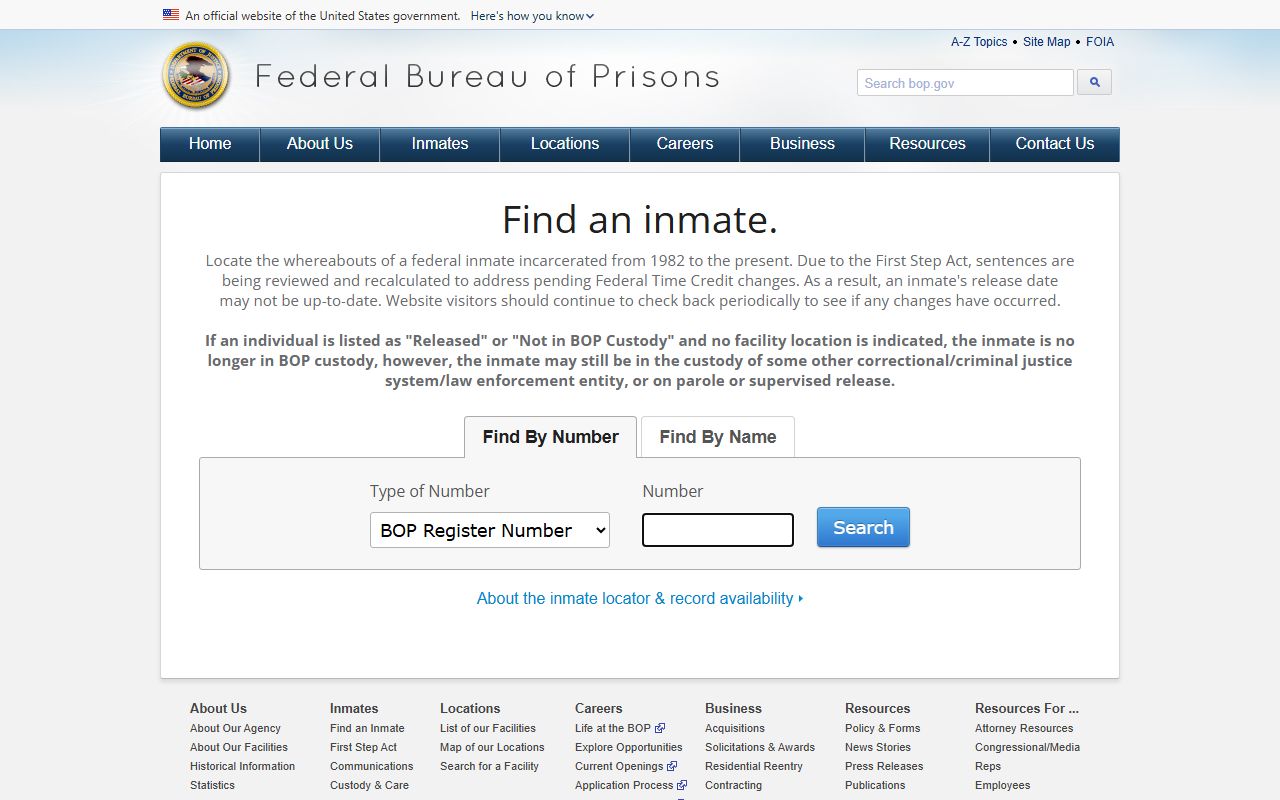
That distinction helps prevent mixing county arrest records, Georgia state-offender records, and federal custody records into one search.
Access to Arrest and Charge Records
Georgia public-record rules favor access unless a statute, court order, or confidentiality rule limits release. Franklin County's local routing separates sheriff records from court records. The Sheriff's Office open-records process applies to releasable arrest, booking, incident, and agency records. The county open-records page states judicial records should be requested directly from the court, even though many court records are open for public viewing.
The Sheriff's Office open-records page lists black-and-white letter or legal copies at $0.10 per page, no charge for the first 15 minutes of search, retrieval, redaction, or supervision work, and later labor charged at the hourly rate of the lowest paid qualified full-time employee. Those sheriff fees do not establish Franklin County court certified-copy fees, which were not located in the official sources captured.
Note: Use sheriff open records for arrest materials and court offices for filed charges, dispositions, and certified court copies.
Restricted Arrest and Charge Records
Georgia record restriction can limit public access to eligible criminal-history records. It does not always erase every court or agency copy. Eligibility can depend on whether the case ended in conviction, dismissal, non-conviction, or another result, along with charge type and statutory conditions. Juvenile matters follow separate confidentiality and sealing rules. Personal identifiers, protected minor information, victim-identifying details, and sensitive medical or mental-health information may be redacted or withheld.
| Restricted or Sealed | Not Public Because Sensitive | |
|---|---|---|
| Adult criminal history | May be restricted under Georgia law when eligible | Some details may still be available to authorized agencies |
| Juvenile matters | Handled under juvenile confidentiality and sealing rules | Public access is not the same as adult charges |
| Identifiers | SSNs, account data, and protected minor information may be redacted | Release may be limited even in otherwise open records |
| Pending investigations | Some law-enforcement details may be withheld | Ask the record custodian what can be released |
Franklin County Prosecutor Role
The Franklin County District Attorney's Office is located at 165 Athens Street in Carnesville, phone 706-384-3064. Its official page states that the office upholds the U.S. Constitution, Georgia Constitution, and state laws, protects crime victims' rights, and pursues fair, effective, and expeditious prosecution of misdemeanors and felonies. The current DA name was not located in the captured official Franklin County page text, so the office name should be used unless an official source confirms a named prosecutor.
No Franklin County official public-defender office page was located in the captured sources. Appointed-counsel or public-defender information should be requested from the court handling the criminal case, the clerk, or the prosecutor-facing court process depending on case stage. For the full case file and final outcome, use the Franklin County criminal court records path.