
Franklin County Criminal Court Records
A Franklin County criminal court record is the court-level file opened once criminal charges enter the judicial system. It is different from a sheriff booking record, jail roster entry, or criminal-history background check. The court record is where accusations or indictments, arraignment entries, motions, plea paperwork, trial entries, verdicts, sentencing orders, probation terms, restitution, fines, and post-judgment filings are tracked.
Superior Court is the main court for felony criminal cases in Franklin County. Probate Court can handle certain misdemeanors, traffic, and game or fish violations unless a jury trial is requested. Magistrate Court has jurisdiction over warrants, limited misdemeanors, bad checks, county ordinance matters, and related hearings. Juvenile Court records are maintained through the Clerk of Superior and Juvenile Courts, but juvenile access is restricted.
The Franklin County Sheriff's Office background-check source is useful for criminal-history request context, but it is not the same as the full court case file.
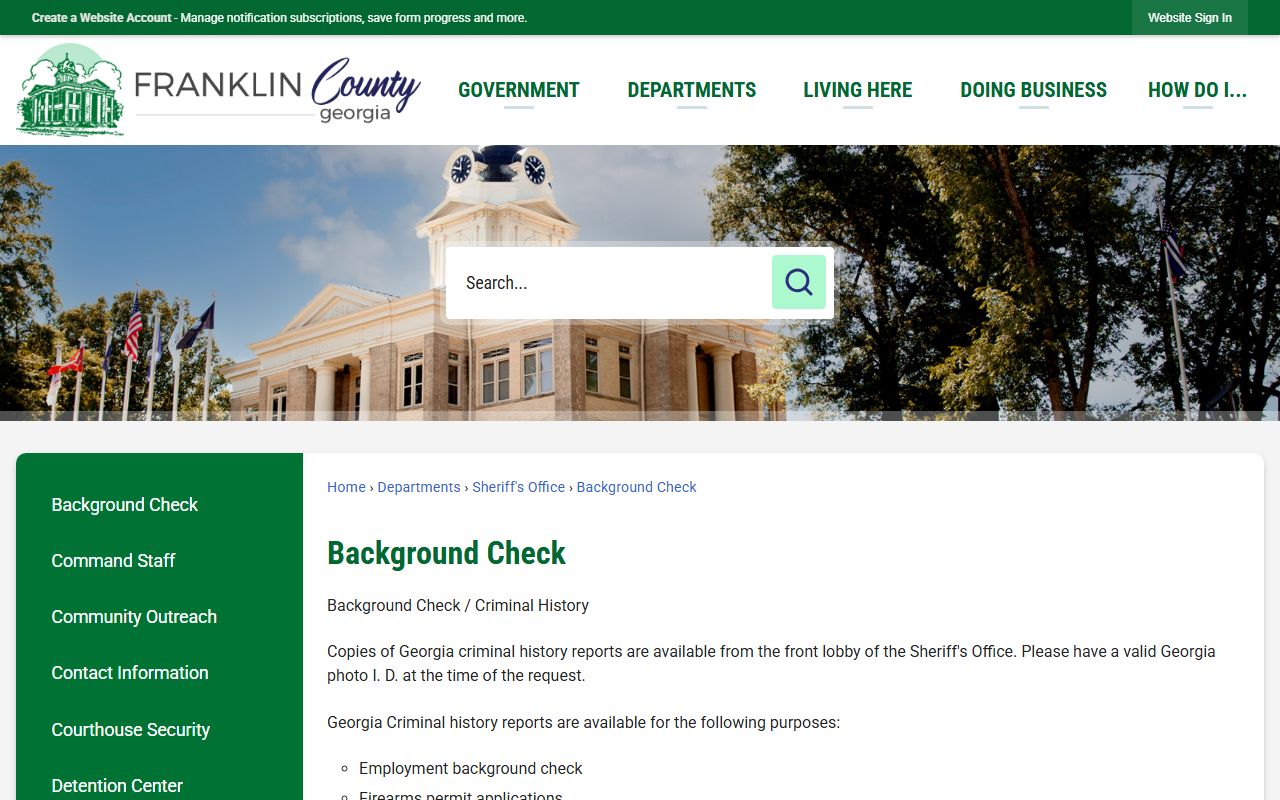
For the court case itself, use the clerk and court channels because the sheriff can only provide records held by the law-enforcement agency.
Search Franklin County Criminal Court Records
The county's Court Dockets page directs users to the Franklin Clerk of Court webpage for Franklin County Clerk of Court dockets. That is the local starting point for many Superior Court criminal docket checks. If the case does not appear online, if document images are unavailable, or if a certified copy is needed, contact the Clerk of Superior and Juvenile Courts at 9592 Lavonia Road, Carnesville, phone 706-384-2514.
- Confirm the court level. Felony cases generally belong in Superior Court, while limited misdemeanors, traffic, and warrant-related matters may begin elsewhere.
- Use the Franklin County Court Dockets page and follow the linked Franklin Clerk of Court portal.
- Search with the live portal fields available, such as name, case number, or date if offered.
- Open the docket and read charges, arraignment, motions, hearings, disposition, and sentence entries in order.
- Request certified copies from the clerk or court that maintains the file if the record is needed for official use.
The District Attorney's Office is a separate prosecution office. Its page states that the office prosecutes misdemeanors and felonies and protects crime victims' rights, but the current DA name was not located in the official county text captured.
That separation matters when a Franklin County criminal court record appears incomplete. The Sheriff's Office may have the arrest or background-check material, the prosecutor may have charge-review information, and the clerk maintains the filed case record after the case opens in court. A criminal case search should not stop at the booking side when the question is plea, disposition, sentence, or certified court copy.
The Franklin County District Attorney's Office source identifies the office involved in prosecution after a case is referred or filed.
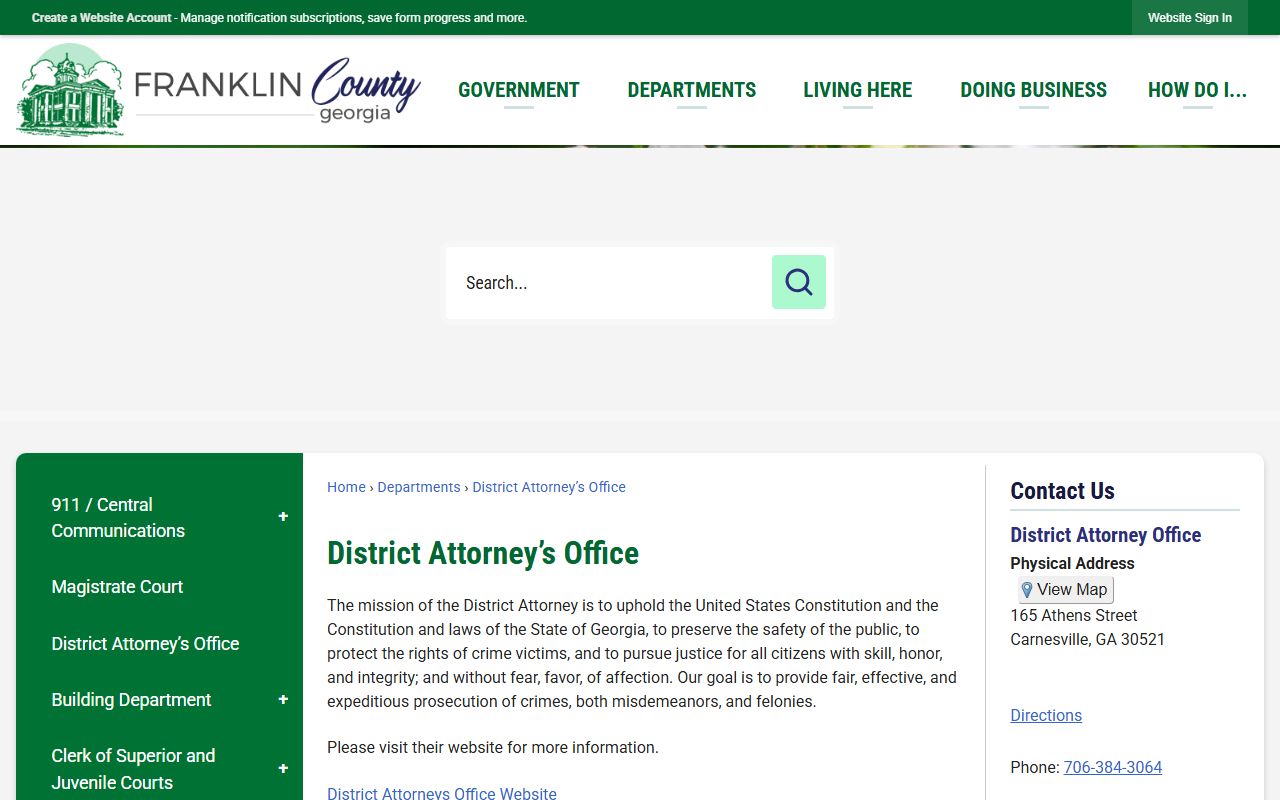
The prosecutor's role helps explain why a court case may show charges that differ from the first arrest or booking description.
Franklin County Criminal Case Stages
Criminal court records should be read as a sequence. The file may begin with charges filed by accusation, indictment, or another charging document. Arraignment follows when the charges are formally addressed and a plea is entered. Pretrial entries can include motions, bond issues, discovery, hearings, continuances, and orders. The case then moves toward plea, trial, dismissal, or another disposition. Sentencing records document punishment and conditions when there is a conviction or plea.
Case flow: Charges Filed › Arraignment › Pretrial / Motions › Plea or Trial › Disposition › Sentencing
| Stage | What Happens |
|---|---|
| Charges filed | The prosecutor or grand jury files the formal charge, accusation, or indictment that starts the court case. |
| Arraignment | The defendant is formally advised of the charges and a plea may be entered. |
| Pretrial / motions | The docket may show bond, discovery, suppression, continuance, and other motion activity. |
| Plea or trial | The case is resolved by plea, trial verdict, dismissal, or prosecutor action such as nolle prosequi. |
| Sentencing | The record may list jail or prison time, probation, fines, restitution, and court-ordered conditions. |
What Franklin County Criminal Records Show
A Franklin County criminal court record can show more than the charge name. It can show how the charge entered court, whether it changed, what hearings occurred, whether the defendant entered a plea, how the court ruled, and what sentence was ordered. The case file can also reveal whether a matter was dismissed, transferred, appealed, restricted, or sealed.
Some criminal-related matters may begin outside Superior Court. Magistrate Court issues warrants and handles limited misdemeanors, bad checks, county ordinance matters, and preliminary or related hearings. Probate Court may handle certain misdemeanors, traffic, and game or fish violations unless a jury trial is requested. When a case becomes a felony prosecution or a jury-trial transfer, the Superior Court file becomes the main court record.
| Field | What It Shows |
|---|---|
| Case number | The court's identifier for the criminal case. No official Franklin County case-number format was located. |
| Defendant | The person charged in the court case, often listed against the State of Georgia. |
| Charges | The offense description, accusation or indictment charge, statute if shown, and any amended or reduced charge. |
| Bond | Release conditions or bond amounts when entered in the court record. |
| Plea | The defendant's answer to the charge, such as guilty or not guilty. |
| Disposition | The outcome, such as guilty, dismissed, nolle prosequi, acquitted, transferred, or closed. |
| Sentence | Jail, prison, probation, fines, restitution, and other court-ordered terms when applicable. |
Charges vs Convictions
A charge is not a conviction. A criminal court record can list charges that were later reduced, dismissed, nolle prossed, or resolved without a conviction. The charge shows what was alleged or filed. The conviction shows that the case ended in a guilty plea, guilty verdict, or other conviction entry. This distinction is central when reading Franklin County criminal court records.
| Charge | Conviction | |
|---|---|---|
| Stage | Filed allegation or accusation | Final verdict, plea, or court finding |
| Record meaning | Shows what the person was accused of in court | Shows the charge was proven or admitted through the case |
| Can change | May be amended, reduced, added, dropped, or dismissed | May affect sentence, probation, fines, and criminal history |
| Where to verify | Docket, charging document, prosecutor, and clerk | Disposition entry, sentence, and certified court copy |
The statewide Franklin County sex offender registration source is separate from the criminal court file and points users to sex-offender registry channels.
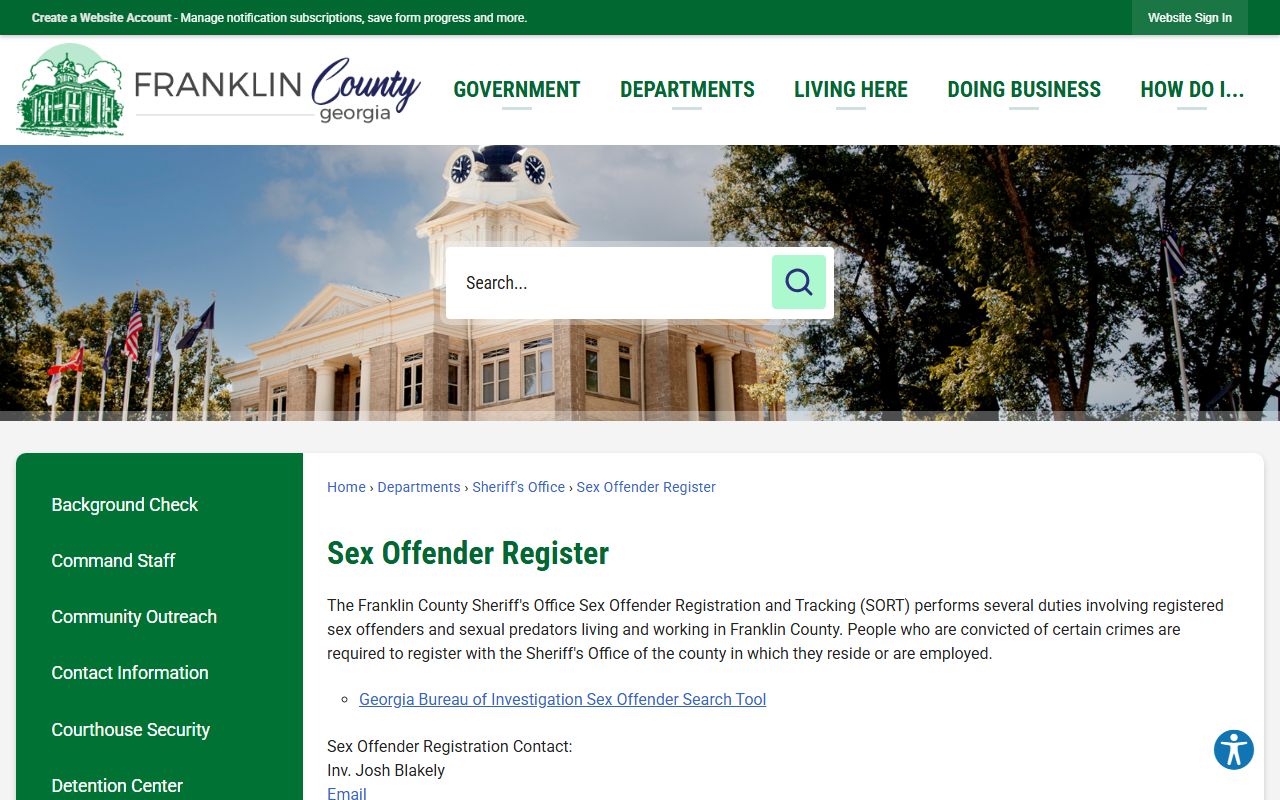
Registry records may reflect registration duties after certain outcomes, but they do not replace the criminal case docket and sentencing file.
Read Dispositions and Sentences
Disposition means the case outcome. In Franklin County criminal court records, disposition language may include guilty, not guilty, dismissed, nolle prosequi, transferred, or closed. Nolle prosequi means the prosecutor dismissed a charge. A sentence entry may list confinement, probation, restitution, fines, court costs, community conditions, or other requirements. Post-judgment entries may show modifications, probation matters, appeals, or later orders.
Read each count separately. A single Franklin County case can include multiple charges, and one count may be dismissed while another count ends in a plea or sentence. Bond, probation, restitution, and fine entries may also apply to only part of a case. If the record is needed for employment-independent legal use, immigration paperwork, licensing, or a court filing, request a certified copy from the court rather than relying on a screen view.
The GBI sex offender registry source is a statewide registry gateway with conditions of use.
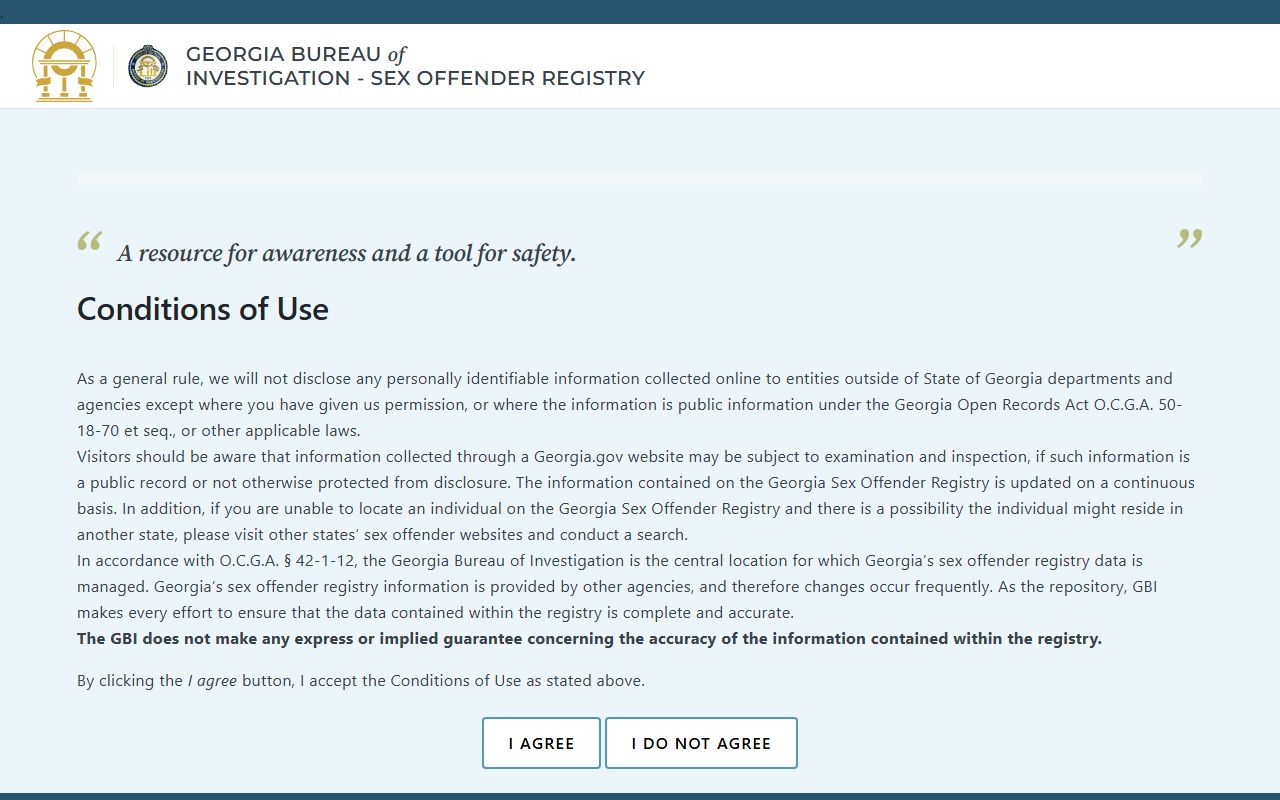
Use registry information only for registry status; use the court record to confirm case disposition and sentence.
Sealed vs Restricted Records
Georgia commonly uses the term record restriction for eligible criminal-history records. Restriction limits public access, but it does not always destroy every government copy. Courts, criminal-justice agencies, and law-enforcement users may still have access where the law allows. Juvenile matters have a separate confidentiality and sealing framework.
| Restricted or Sealed | Expunged in Common Speech | |
|---|---|---|
| Georgia term | Record restriction is the key adult criminal-history term. | Often used casually, but Georgia restriction does not always mean destruction. |
| Public view | Public access may be limited under statute or court order. | The public may expect nonvisibility, but eligibility depends on law. |
| Agencies | Courts and criminal-justice agencies may retain access. | Government copies may remain available to authorized users. |
| Eligibility | Depends on charge type, outcome, conviction status, and statutory conditions. | Do not assume eligibility without checking the court and statute. |
Public Access to Criminal Records
Georgia public-record policy is stated in O.C.G.A. 50-18-70, and agency response and cost rules appear in O.C.G.A. 50-18-71. Court files are handled through the judiciary, and Franklin County's open-records routing page says judicial records are requested directly from the court while many remain open for viewing.
Key Statutes:
O.C.G.A. 35-3-37 - Georgia record restriction controls eligible criminal-history access limits.
O.C.G.A. 15-11-709 - juvenile records are preserved but subject to juvenile confidentiality and sealing rules.
Restricted Franklin County Criminal Records
Restricted criminal court records include juvenile records, sealed cases, eligible restricted criminal-history material, and records withheld by court order. Personal identifiers, protected minor information, financial-account details, and victim-identifying information may be redacted. Adoption and certain mental-health or involuntary hospitalization records should not be treated as open criminal files.
The Georgia record restriction source is the main statewide legal reference for adult criminal-history restriction.
For Franklin County cases, restriction questions may require the arresting agency, prosecutor, and clerk because each office controls a different part of the record chain.
The Georgia juvenile record source explains why juvenile court material is handled differently from adult criminal court files.
Juvenile confidentiality is one of the clearest reasons a Franklin County criminal-related search may return less public information than expected.