
Franklin County Court Docket Basics
A docket is the court's running index of case events. In Franklin County, a docket may show the case number, court, parties, filing dates, hearing dates, motion entries, continuances, orders, disposition, sentence, transfer, dismissal, or appeal activity. It is usually the fastest way to confirm the status of a local court case, but it may not include the full text of every pleading, exhibit, or order.
The docket also helps separate similar record types. A Superior Court criminal docket tracks felony prosecution after court filing. A Probate Court traffic docket or payment record may show citation activity. A Magistrate Court docket may involve warrants, small claims, dispossessories, bad checks, garnishments, and county ordinance matters. The docket is the timeline; the full court record is the underlying file.
Franklin County docket work is also a routing problem. The Clerk of Superior and Juvenile Courts is the right office for Superior and Juvenile docket entries, but Juvenile Court access is limited. Probate Court keeps its own records and has a separate counter for estates, marriage-license work, traffic matters, and certain misdemeanor or game and fish cases. Magistrate Court keeps records for warrant and lower-court civil matters. A docket search should start by asking which court could legally have opened the case.
- Docket
- A chronological register of filings, hearings, orders, and case events.
- Disposition
- The final case outcome, such as dismissed, guilty, nolle prosequi, judgment, or closed.
- Continuance
- A court order postponing a hearing or deadline.
- Certified copy
- A copy authenticated by the clerk for official use.
Find Franklin County Court Dockets Online
The official local starting point is the Franklin County Court Dockets page. The county directs users from that page to the Franklin Clerk of Court webpage for all Franklin County Clerk of Court dockets. The portal is the local doorway for clerk docket searches, but the research capture did not expose a full public field list, so the live portal should be checked for current search options.
- Start with the court type. Superior Court dockets cover felony, divorce, domestic, major civil, equity, land-title, and transfer matters.
- Use the county Court Dockets page and follow the Franklin Clerk of Court portal link.
- Enter the search details available in the live portal, such as a party name, case number, or date field if offered.
- Read the docket entries in order and note hearing dates, orders, dispositions, and whether a full document must be requested.
- Contact the court office when the docket is missing, unclear, restricted, or when a certified copy is needed.
The PeachCourt account access source shows Georgia's account-based e-filing and document environment.

PeachCourt can be part of the document and filing workflow, while the local court docket still determines where the Franklin County case is pending.
Franklin County Docket Entry Fields
The research did not locate a Franklin County sample docket entry with every visible field, so the field inventory should stay tied to the typical court-record fields documented in the research. These are the items a reader should expect to interpret when the clerk docket, a Probate traffic record, or a Magistrate case register returns a result.
| Field | What It Shows |
|---|---|
| Entry date | The date a filing, order, hearing notice, continuance, disposition, or sentence was entered. |
| Case number | The court's identifier for the file. No official Franklin County format was located. |
| Court or division | Superior, Juvenile, Probate, Magistrate, or municipal court if applicable. |
| Party names | Plaintiff and defendant, State of Georgia and defendant, petitioner and respondent, or estate parties. |
| Event type | Complaint, answer, motion, hearing, continuance, order, judgment, sentence, transfer, dismissal, or appeal. |
| Disposition | The outcome or case status, including guilty, dismissed, nolle prosequi, judgment, closed, or transferred. |
| Document indicator | Whether an entry may correspond to a filed document that must be viewed through the clerk or portal account. |
Courts With Franklin County Dockets
Franklin County docket access follows the same court hierarchy as the case file. Superior Court is the broad trial court for felony criminal cases, divorces and domestic relations, land-title issues, equity matters, jury-trial transfers, and higher civil cases. Juvenile matters are maintained through the same clerk office but are restricted. Probate and Magistrate Court records are held by their own court offices.
The county open-records routing page reinforces that split. It does not send every court question through one general request form. Instead, it lists Clerk of Superior Court, Magistrate Court, Probate Court, and the Sheriff's Office as separate contacts. For docket users, that means a missing online match can be a court-level mismatch rather than proof that no record exists.
| Court | Docket or Case Types | Access Channel |
|---|---|---|
| Superior Court | Felonies, divorce, domestic, land-title, equity, major civil, transfers | County docket page, clerk portal, clerk office |
| Juvenile Court | Juvenile matters | Clerk of Superior and Juvenile Courts, with access limits |
| Probate Court | Estates, wills, guardianships, marriage, some misdemeanors and traffic | Probate Court counter and traffic payment tools where applicable |
| Magistrate Court | Warrants, small claims to $15,000, dispossessories, garnishments, bad checks | Magistrate Court contact and case-specific request |
| Municipal courts | City ordinance and citation matters | City-specific channels, because no countywide municipal docket was located |
| Federal courts | Federal civil, criminal, bankruptcy, and appellate matters | PACER and the relevant federal court |
Docket vs Full Case Record
A Franklin County docket is useful for tracking status, but it should not be read as the whole file. The docket can tell a reader that a motion was filed, a hearing was scheduled, a sentence was entered, or a case was dismissed. The full case record may include the complaint, indictment, accusation, order, motion, exhibit, sentencing form, or certified decree behind those entries.
That difference matters for legal use. A docket printout may be enough to understand case progress, but certified copies are usually requested from the clerk or court office. Older Probate Court files may be in the court vault. A restricted juvenile or sealed criminal file may show little or nothing to the public even when a nonpublic court record still exists.
| Docket | Full Case Record | |
|---|---|---|
| Format | Chronological list of events | Filed documents, orders, forms, and exhibits when public |
| Main use | Track case progress and hearing status | Review the legal file or request official copies |
| Access | Often searched first online or by court counter | May require account access, fee, visit, or certified-copy request |
| Limits | May omit document images | May include restricted, sealed, or redacted material |
Read Franklin County Court Dockets
Read a docket from the earliest entry forward. The first entry often shows the filing, petition, warrant, complaint, citation, accusation, or indictment that opened the matter. Later entries show service, answers, hearings, continuances, motions, orders, pleas, judgments, transfers, and appeals. In a criminal case, do not treat the first charge entry as a conviction; a charge may later be reduced, dismissed, nolle prossed, or resolved by plea or trial.
For civil or domestic dockets, watch for final orders and judgment entries. For Probate Court, check whether the entry concerns a public estate or marriage record, a guardianship, or a sensitive matter. For Magistrate Court, the docket may point to a small claim, dispossessory, garnishment, bad-check proceeding, subpoena, warrant, or county ordinance matter.
If a Franklin County docket search returns no match, the next step is usually not a broader web search. Check whether the matter belongs to a different court level, whether the case is too old for the online system, whether the file is restricted, or whether the case is held by Probate Court, Magistrate Court, or a city court. Certified copies, sealed-record questions, and unclear entries should be handled by the court office that created the docket.
Traffic docket questions need special care. Franklin County Probate Court handles many traffic citations and uses EZCourtPay for most online payments, but the county says citations may take 7 to 10 business days to appear. A mandatory-appearance citation, late payment, or not-guilty plea may require direct Probate Court contact. If a jury trial is requested, the traffic matter transfers to Superior Court, so later docket entries may need the Superior Court clerk channel.
Older probate docket questions may also require a counter request. Franklin County Probate Court states that records date back to the late 1800s in the court vault. A will, estate, guardianship, or historical marriage record may therefore be local and public enough to view, but not searchable through the modern clerk docket channel. Give the court a name, date range, case year if known, and requested document type before mailing payment.
Note: A docket entry can confirm activity, but the filed document may require a clerk request or account access.
Federal Dockets for Franklin County
Federal cases are not filed in Franklin County Superior, Probate, or Magistrate Court. A local dispute becomes federal only when it involves federal criminal charges, bankruptcy, federal civil claims, federal habeas, civil-rights litigation, federal tax or agency matters, or diversity jurisdiction. Those records move through federal systems rather than county court counters.
The PACER source is the federal judiciary's electronic access system for federal case dockets and documents.
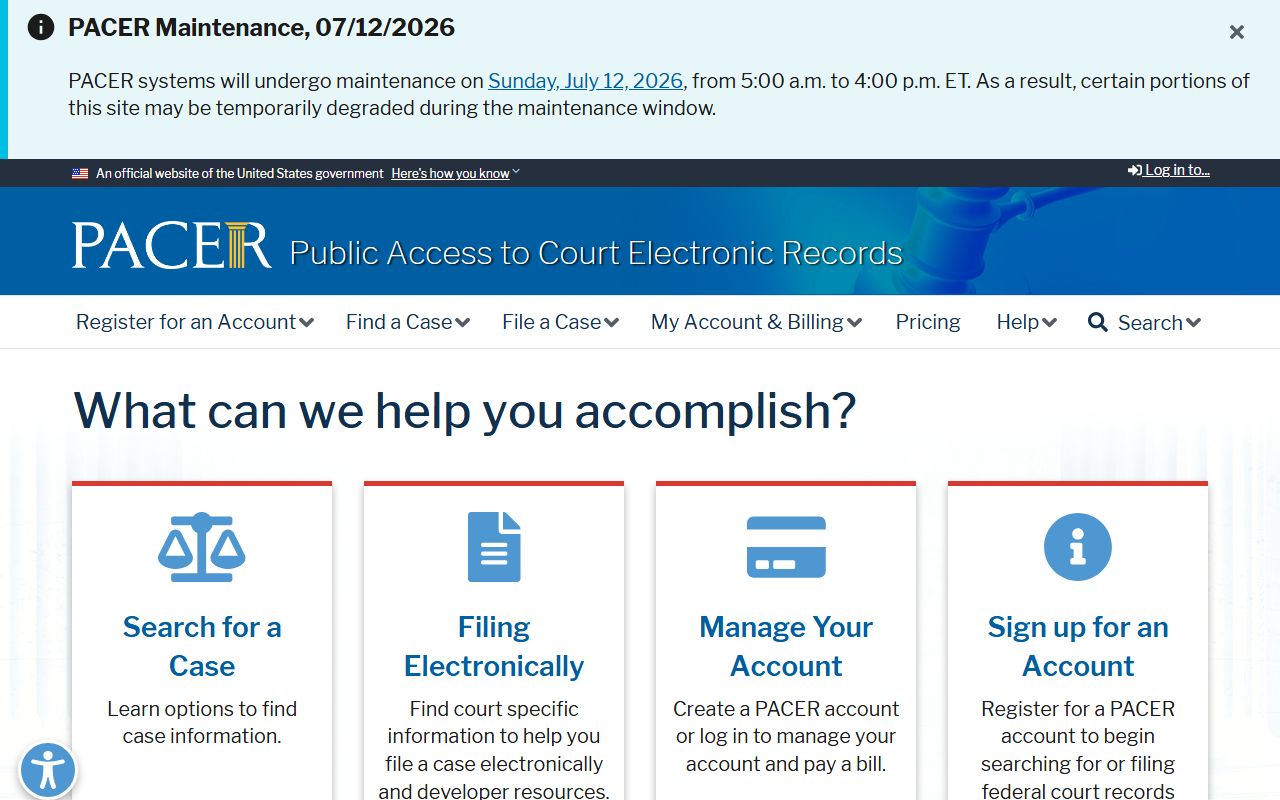
Use PACER for federal court records and the Franklin County court channels for county Superior, Probate, Magistrate, and related local docket records.